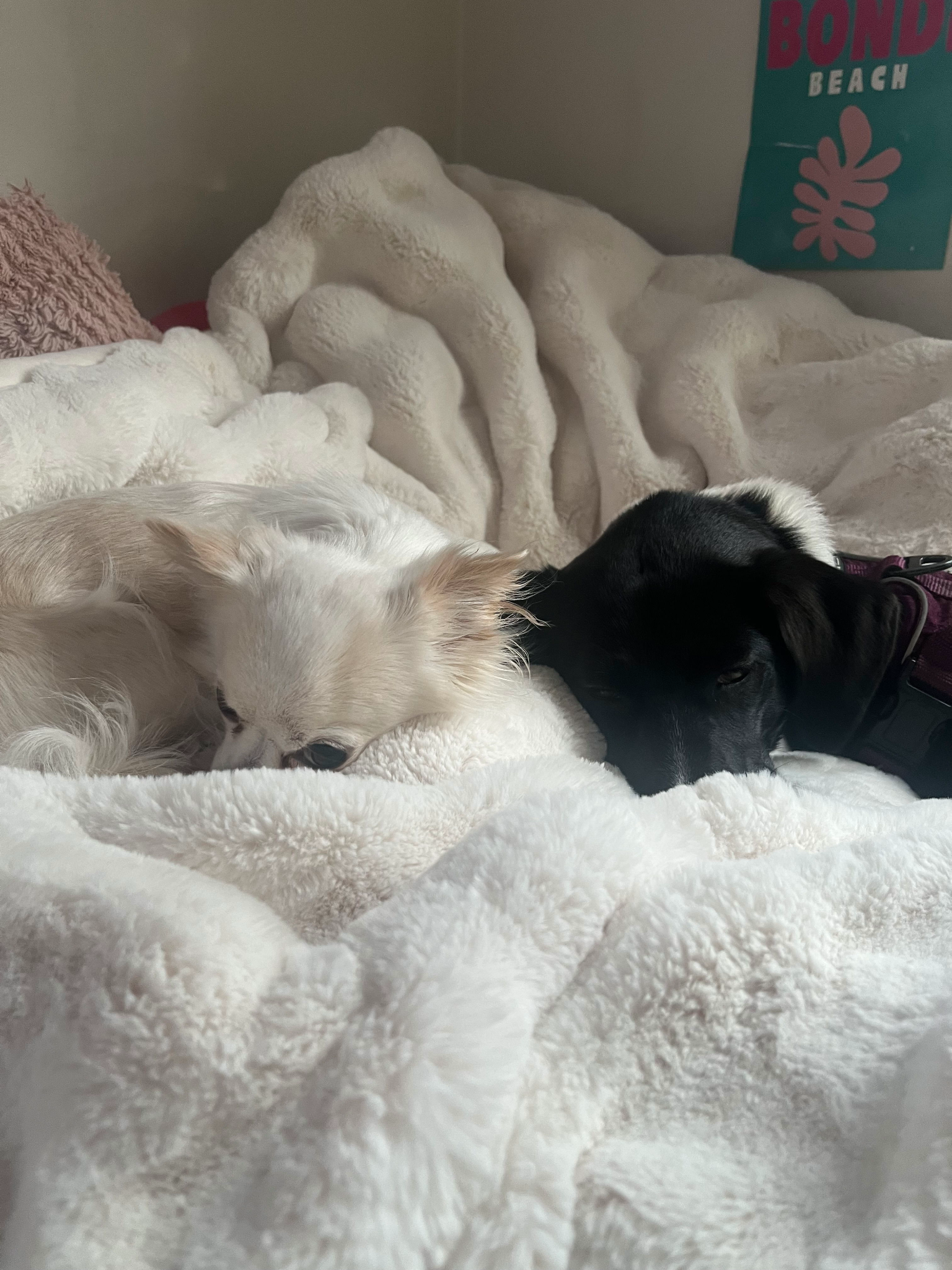
Sensitive dogs don’t just react to noise or movement, they react to patterns. They track energy shifts, anticipate change, and feel every transition in the room. In high volume boarding facilities, the busiest place is always the same, the door.
Doors open for drop offs. Doors open for pickups. Doors open for staff rotations. Doors open for cleaning. Doors open for potty breaks.
For confident dogs, this is background activity. But for sensitive, slow to warm, or easily overwhelmed dogs, constant door movement becomes a steady stream of emotional interruptions. It keeps their nervous system on alert and prevents them from ever fully settling. I talk more about this emotional sensitivity in my Sensitive Dog Boarding Vancouver guide.
Every time a door opens, sensitive dogs pause. They look up. They assess. They wait to see who’s coming in, who’s leaving, and what the energy shift will feel like. This isn’t misbehaviour, it’s self protection. Their brain is wired to scan for safety, and every door movement becomes a new question they have to answer.
In busy facilities, this can happen dozens of times an hour. And each time, their body releases a tiny burst of cortisol, the stress hormone. One or two bursts are manageable. Stacked over a full day, it becomes emotional fatigue.
This is why so many sensitive dogs come home from high volume boarding exhausted, clingy, or unusually quiet. They weren’t “playing hard.” They were monitoring. They were managing themselves. They were absorbing the energy of every transition.
Door activity also disrupts social dynamics. Every time a new dog enters or leaves, the group recalibrates. Sensitive dogs feel this shift immediately. They step aside, shrink their presence, or over manage their behaviour to avoid conflict. It’s not who they are it’s, what the environment demands.
In a small, curated home environment, the opposite happens. The door rarely opens. The energy stays consistent. The group remains stable. The caregiver is the same person all day and all night.
There are no sudden bursts of noise. No unpredictable arrivals. No rotating staff. No constant transitions.
Dogs don’t have to track anything. They don’t have to brace for change. They don’t have to manage the room. They can finally breathe.
This is why sensitive dogs settle so deeply here. They’re not navigating a revolving door of energy. They’re not monitoring movement. They’re not recalibrating every hour. They’re held by consistency, something high volume facilities simply can’t replicate.
If your dog struggles in busy environments, reacts to sudden movement, or becomes overwhelmed by constant activity, it may not be “behaviour.” It may be the environment itself. Sensitive dogs thrive when the world around them is predictable, gentle, and emotionally safe, something I also explore in Why Dogs Sleep Better in Home Boarding, where rest comes naturally when the nervous system isn’t working overtime.
A quiet home. A stable group. The same caregivers every day. A door that isn’t opening every few minutes.
If you’d like to understand whether this environment is the right fit for your dog, you can start with our Dog Boarding Assessment, a gentle, thoughtful way to explore your dog’s needs and see if they align with our home based approach.
And if you’d like to learn more about how we support sensitive dogs in a calm, emotionally attuned setting, you can visit our Dog Boarding Vancouver page.