Some dogs walk into a space and immediately start gathering information. They scan doorways, track movement, listen for patterns, and try to understand how the environment works. Anxious dogs do this at a level most people never notice. Their nervous system is constantly collecting data, and the type of boarding environment they’re in determines how much their body has to process.
Kennel boarding gives anxious dogs too much information at once. The acoustics are sharper, the smells are layered and unfamiliar, and the movement of people and dogs follows a flow that doesn’t match how dogs naturally interpret space. Doors open and close in quick bursts. Dogs vocalize in ways that echo. Staff move with purpose because they have a schedule to follow. For a dog who already struggles to regulate, this becomes a full time job for their nervous system. They’re not misbehaving, they’re overwhelmed by the amount of sensory input they’re forced to decode.
This constant state of high alert leads to what we call "trigger stacking." In a commercial Vancouver dog kennel, each loud bang or unfamiliar bark adds a drop to your dog's "stress bucket." When that bucket overflows, we see the common symptoms of kennel stress: refusal to eat, obsessive pacing, or complete emotional shutdown. For owners of reactive or anxious dogs in the Lower Mainland, the goal isn't just to find a place that "handles" the dog, but a place that proactively prevents the bucket from filling. By choosing a low stimulus environment, you are effectively protecting your dog's long term behavioral health.
In a real home, the sensory landscape is completely different. The sounds are softer. The air carries familiar household scents. Human movement follows a pattern dogs already understand because it mirrors the way people move in their own homes. Anxious dogs don’t have to figure out the environment, they already know how to exist in it. Their nervous system stops working overtime because the space doesn’t demand constant interpretation.
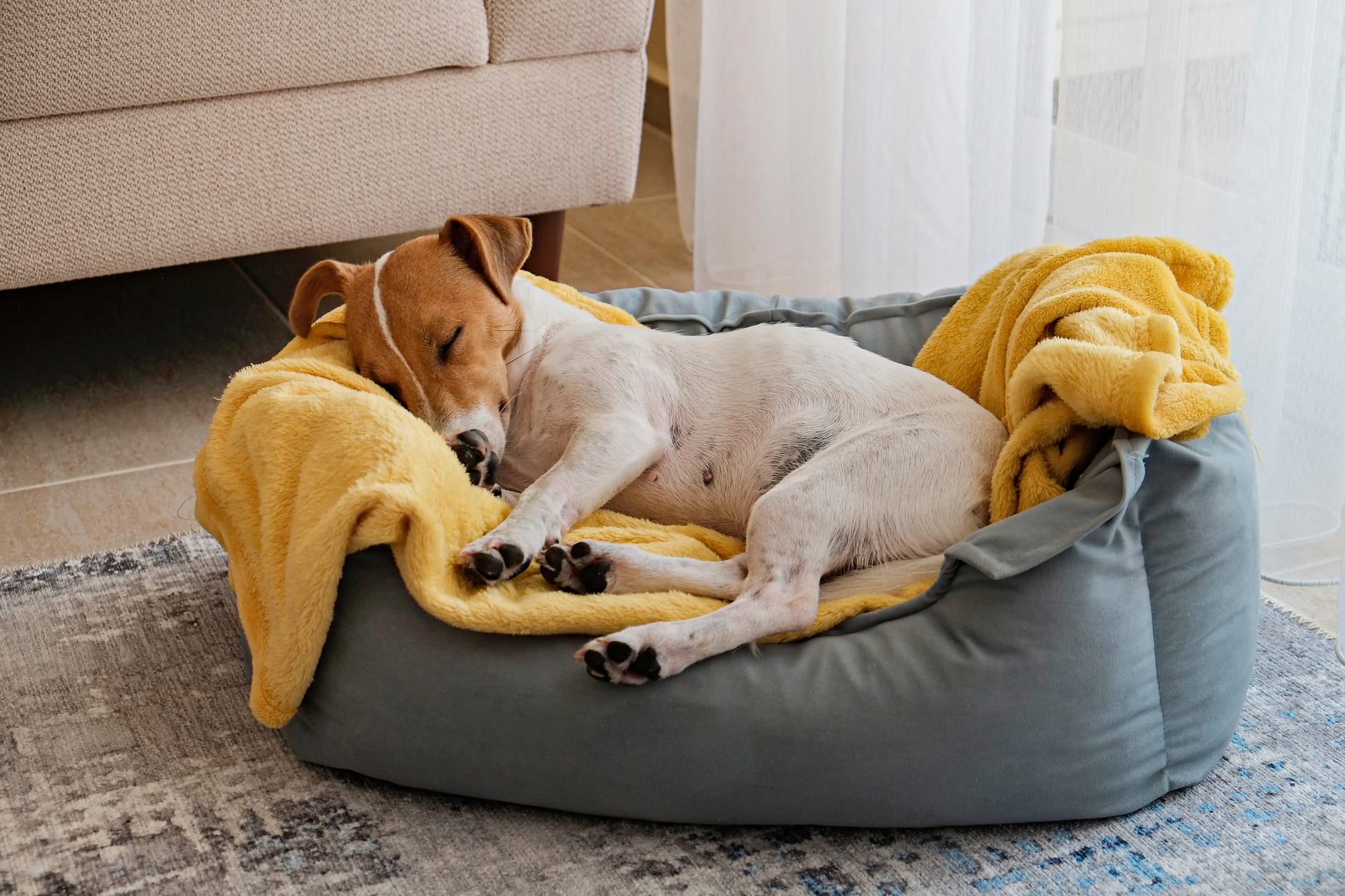
One of the clearest differences shows up in how anxious dogs use space. In kennels, they often stay close to walls or corners because those areas feel predictable. They avoid the center of the room. They hesitate before lying down. They sleep facing the door because they’re preparing for whatever might come through it. In a home, they claim space differently. They stretch out. They choose soft surfaces. They sleep with their bodies exposed instead of curled tight. Their posture tells you exactly how safe they feel.
Communication changes too. In kennels, anxious dogs often communicate less. They suppress signals because they’re not sure anyone is paying attention. In a home, they start offering more information, small tail wags, soft eye contact, quiet check ins. They feel safe enough to express themselves, and that expression is what helps them settle.
People sometimes assume anxious dogs need training to handle boarding. What they actually need is an environment that doesn’t overload their system. Real‑home boarding doesn’t “fix” anxiety, but it removes the barriers that prevent anxious dogs from coping. It gives them a space where their nervous system can downshift instead of brace. And once that happens, their behaviour changes in ways that have nothing to do with obedience and everything to do with relief.
While the home aspect is what helps a dog relax, the "professional" aspect is what keeps them safe. When moving away from the traditional kennel model, it is vital to ensure your home boarding provider is fully insured and, where required by local law, licensed by the city. A professional home environment isn't just a house; it's a curated space designed for safety. This includes secure, escape-proof gardens, 24/7 supervision, and clear protocols for emergency veterinary care. For an anxious dog, knowing their physical boundaries are secure allows them to let their guard down even further. By choosing a provider who understands both canine behaviour and professional safety standards, you’re providing a level of care that a high-volume kennel simply cannot replicate.
That’s the real difference. Not comfort. Not luxury. Not aesthetics.
Cognitive load. Sensory load. Emotional load. A real home reduces all three. A kennel amplifies them.
And anxious dogs feel that difference immediately.